Table of Contents
Myths DEBUNKED: What to Eat (and What to Skip) During Pregnancy
Pregnancy brings joy—and plenty of puzzling advice about what to eat. From “eating for two” to cutting out coffee, it’s easy to feel swamped by conflicting tips. This guide clears up the most common nutrition myths, showing you what’s truly safe and what you can ignore. With these evidence-based facts, you’ll feel confident choosing foods that nourish both you and your baby—minus the unnecessary stress.
1. “Eating for Two”
- Myth: You must double your food intake.
- Reality: No extra calories are needed in the first trimester. In the second trimester, just an extra 200–400 kcal/day; in the third, about 450–500 kcal/day. Your body naturally becomes more efficient at extracting nutrients, so you don’t have to “eat twice as much.”
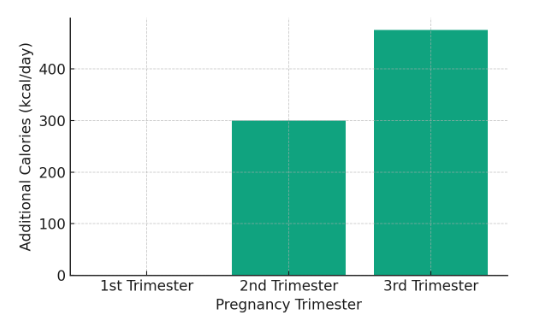
Chart showing additional recommended kilocalorie increases for pregnant women by trimester (Institute of Medine, 2009)
2. Absolutely no Caffeine
- Myth: All caffeine is off-limits.
- Reality: Up to 200 mg/day (about one 12-oz coffee) is generally safe. Just watch hidden sources (tea, chocolate, energy drinks).
3. No seafood at all
- Myth: All fish must be avoided.
- Reality: Avoid only high-mercury species (shark, swordfish, king mackerel). Low-mercury options—salmon, shrimp, canned light tuna—are great sources of omega-3s when eaten in moderation (8–12 oz/week).
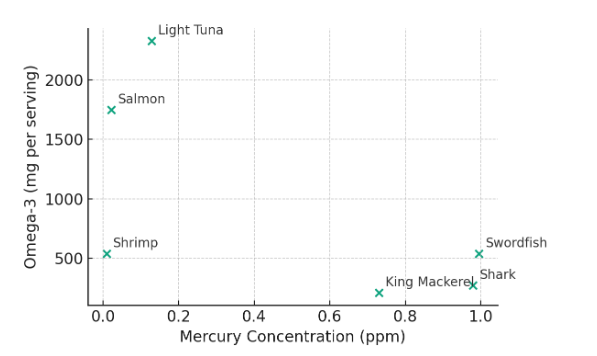
Comparison of mercury concentration (ppm) and omega-3 fatty acid content (mg per serving) for six fish species, highlighting safe low-mercury, high-omega-3 choices (USFDA, 2020).
4. Every cheese is dangerous
- Myth: You can’t eat any cheese.
- Reality: Pasteurized hard cheeses (cheddar, Parmesan) are safe. Just steer clear of unpasteurized or soft cheeses (brie, feta, Camembert).
5. Morning sickness only in the morning
- Myth: Nausea happens only after waking up.
- Reality: “Morning sickness” can strike any time of day. Small, frequent, protein-rich snacks and staying hydrated help tame it.
6. Cravings predict baby’s gender or nutrient needs
- Myth: Sweet means girl, salty means boy; or a craving signals a specific deficiency.
- Reality: No scientific basis for gender predictions, and cravings don’t reliably indicate nutrient gaps—except if you crave non-food items (“pica”), which can signal iron deficiency.
7. All herbal teas are harmless
- Myth: Any “pregnancy” tea is safe.
- Reality: Some herbs (fennel, licorice, pennyroyal, etc.) can be risky. Always check with your healthcare provider before brewing.
8. Prenatal vitamins replace real food
- Myth: You can skip the healthy diet if you take vitamins.
- Reality: Supplements fill gaps but don’t provide fiber or phytonutrients. Whole foods remain the cornerstone of a healthy pregnancy.
9. Bigger babies are healthier
- Myth: A larger newborn is better.
- Reality: Excessive weight gain can lead to gestational diabetes, higher C-section rates and long-term risks. Focus on balanced nutrition and appropriate weight gain.
10. Spicy foods trigger early labor
- Myth: Eating chili sends you into labor.
- Reality: No evidence supports this; most people tolerate spicy foods fine in moderation (though heartburn can occur).
Eating well during pregnancy doesn’t require extreme rules or fear.
By debunking outdated myths, you can focus on a balanced, nutrient-packed diet—adding only modest calories, safe amounts of caffeine, and approved seafood.
Combine smart food choices with prenatal supplements as advised by your healthcare provider, and ask questions whenever in doubt.
Armed with clear information, you’re set for a healthier, more relaxed pregnancy journey.
Start Your Journey Today
Take the first step towards parenthood with confidence. Contact Metro IVF to schedule a consultation and explore our fertility testing options tailored to your needs.
