Table of Contents
Fertility: Tradition Practices vs Modern Treatments in Malaysia
Did you know that about 15% of couples worldwide face fertility challenges? In Southeast Asia, especially in Malaysia, having children is often seen as a big part of marriage and family life. That’s why infertility can cause emotional stress and social pressure.
In Malaysia, people often combine traditional beliefs and practices with modern fertility treatments like in vitro fertilization (IVF). This article explores how traditional views and modern medicine come together to help couples achieve their dreams of having a baby.
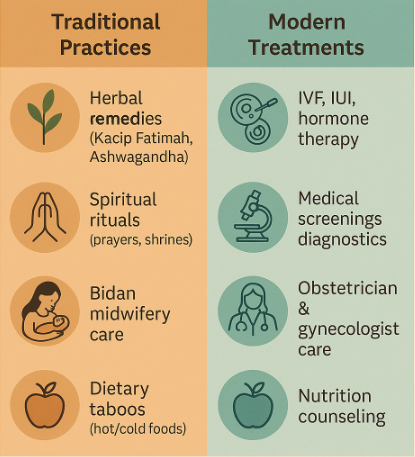
Overview of traditional practices and modern fertility treatments in Malaysia
Traditional beliefs and practices related to fertility
- Spiritual and Cultural Beliefs
In many Southeast Asian cultures, infertility is not just a medical issue. Some believe it’s linked to karma, fate, or spiritual causes. For example:
- In Thailand, people may see infertility as related to karma or past deeds.
- In Malaysia, couples might think spiritual forces, curses, or moral actions affect their fertility.
Because of these beliefs, couples often visit shrines, temples, or sacred places to pray for children. These journeys are important spiritually and emotionally, especially for women, who often feel the greatest pressure to conceive.
- Herbal Remedies for Fertility
Traditional herbal medicine plays a big role in improving fertility for both men and women in Malaysia.
Nonetheless, it is important to note that some herbs can be harmful, and it is best to consult with your fertility doctor before undergoing any traditional treatment.
For women:
- Kacip Fatimah (Labisia pumila) – used to maintain a healthy reproductive system and regulate menstrual cycles.
- Ashwagandha, Red clover, Maca root, Vitex (Chaste Tree) – believed to balance hormones, reduce stress, and improve ovulation.
For men:
- Bee pollen, Galangal root, Turmeric, Black seed (Nigella sativa) – used to boost sperm production, improve sperm quality, and enhance male hormones.
These herbs are often used because people believe they help restore the body’s “heat,” balance hormones, and improve overall vitality needed for conception.
Traditional midwives and fertility practices
In Malaysia, traditional midwives (bidan) are highly respected for their knowledge about fertility, childbirth, and postpartum care. Their services include:
- Giving herbal remedies to improve fertility before conception.
- Performing prenatal massages like lenggang perut (rocking the abdomen) to position the baby for easier delivery.
- Guiding mothers through postpartum care, such as special diets, herbal baths, massages, and using bengkung (abdominal binding) to help recovery.
They also integrate Islamic rituals like whispering the call to prayer (azan) into the newborn’s ear and holding ceremonies such as hair shaving (cukur rambut) and animal sacrifice (aqiqah).
However, bidan are not officially recognised as gazetted healthcare professionals in Malaysia and therefore can only play a supportive role. For appropriate fertility care, it is essential to consult a qualified clinician.
Dietary beliefs and taboos
Traditional diets during pregnancy and postpartum are guided by the idea of “hot” and “cold” foods. For example:
- Pineapple is often avoided during pregnancy as it is believed to cause miscarriage (although there is no scientific proof).
- Some foods are avoided to influence the baby’s appearance or gender.
These food practices aim to keep the body balanced, protect the baby, and ensure safe childbirth.
Limited scientific support on herbal remedies and fertility practices
- Although some herbal remedies show potential, most studies are small-scale, animal-based, or lack rigorous clinical trials.
- Dosage, safety, and efficacy for fertility are not well-established in humans.
- Herbal remedies can interact with medications or treatments, so it’s important to consult doctors or fertility specialists before use.
As such, medical remedies should not replace medical fertility treatments, and they should only be used under guidance of a qualified practitioner to avoid risks.
Combining traditional practices with modern fertility treatments
Why do people combine both?
In Malaysia, couples often try traditional remedies first because they are accessible, affordable, and culturally familiar. If these don’t work, they may seek modern treatments like IVF or IUI. Many combine both, using:
- Acupuncture and herbal therapies to reduce stress and improve fertility alongside IVF treatments.
Infertility often causes emotional distress, social stigma, and even marital problems. Traditional methods provide spiritual and emotional support, while modern medicine focuses on the physical aspect. Together, they offer more holistic care. It is therefore important for couples to realize the time to seek modern treatment. Feel free to make an appointment with us at Metro IVF for consultation. Our caring team is here to support and guide you every step of the way on your journey to parenthood.
Integration in modern clinics
The Malaysian government is investing in fertility care, such as:
- Setting up a National Subfertility Centre.
- Offering IUI Assistance and Infertility Advocacy Programmes.
Many fertility centres now combine Western medicine with Traditional Chinese Medicine (TCM), offering:
- IVF, IUI, and surgical treatments.
- Acupuncture, cupping, and herbal therapies to improve egg and sperm quality, balance hormones, and provide emotional support.
However, most doctors still want more scientific evidence for traditional treatments to ensure safety and effectiveness. There are also challenges like patients not telling doctors about their herbal or traditional practices, which can affect treatment plans.
Conclusion
In Malaysia, fertility care is a blend of old and new. Traditional beliefs and practices give emotional, spiritual, and cultural support, while modern treatments provide scientific solutions to infertility. Together, they offer comprehensive care that respects cultural and religious values, helping couples achieve their dream of becoming parents. However, it is important for couples to realize the time to seek timely professional care to improve their chances of conceiving.
Start Your Journey Today
Take the first step towards parenthood with confidence. Whether it is for initial consultation or technical advice, Metro IVF is ready to help. Contact Metro IVF to schedule a consultation and explore our fertility testing options tailored to your needs.

