Debunking Common Myths About IVF and ART

Table of Contents

Debunking Common Myths About IVF and ART

Why we need to talk about IVF myths

Infertility affects more couples than you might think–yet misunderstandings about in vitro fertilization (IVF) and other Assisted Reproductive Technologies (ART) create extra worry, delay treatment, and even add to social stigma. Let’s set the record straight so every family can feel confident making informed choices.

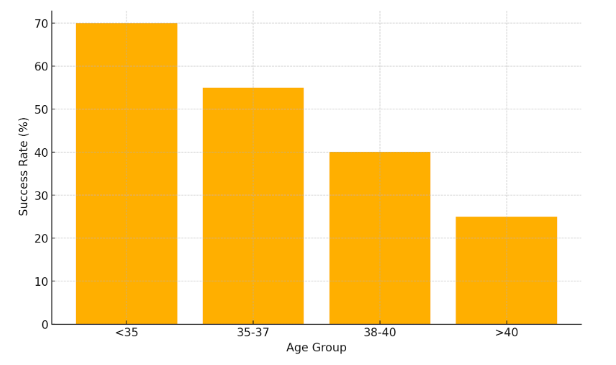
Chart showing IVF success rates vs age group, highlighting the importance for higher-age couples to seek professional advice and treatment early and not be influenced by IVF and ART myths World Health Organization, 2020).

Chart showing IVF success rates vs age group, highlighting the importance for higher-age couples to seek professional advice and treatment early and not be influenced by IVF and ART myths World Health Organization, 2020). 

Myth 1: “IVF always means twins or triplets!”

The myth: Almost everyone who does IVF ends up with twins or triplets.
The fact: Today’s clinics aim for a single, healthy baby.

      • Why people worry: In the past, doctors often transferred multiple embryos to boost chances.
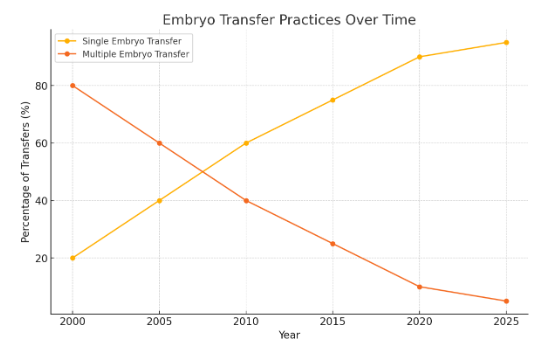
      • What really happens now: Most Malaysian clinics transfer only one embryo at a time, cutting the multiple-birth rate by over half. That means fewer risks (premature birth, low birth weight) and a safer pregnancy for mum and baby.

Embryo Transfer Practices Over Time Chart illustrating the rising adoption of single embryo transfer, which has led to higher implantation success rates and reduced health risks for both mothers and embryos (European Society of Human Reproduction and Embryology, 2025).
Myth 2: “IVF babies are weaker or unhealthy”

The myth: Children born via IVF have more birth defects or developmental problems.
The fact: IVF babies are just as healthy as naturally conceived babies.

      • Both groups carry a 3–5% baseline risk of birth defects.
      • Any small differences seen in some studies usually stem from factors like the parents’ age or medical history, not the IVF process itself.

Myth 3: “IVF guarantees a baby for everyone”

The myth: If you do IVF, you will definitely get pregnant.
The fact: IVF greatly improves your odds– but it’s not a sure thing.

      • Success depends most on the woman’s age and egg quality.
      • In Malaysia, women under 35 have up to a 65–75% chance of pregnancy per cycle; this drops with age.
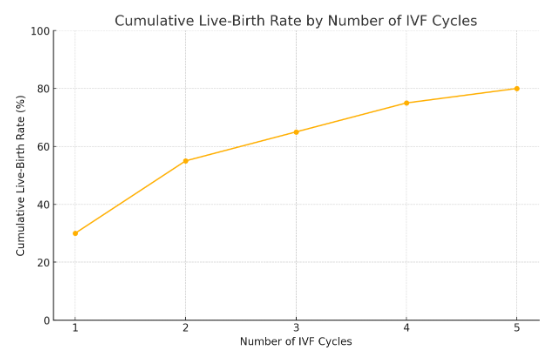
      • Many couples need more than one cycle–and that’s okay! Each attempt offers new insights and often leads to success.

cumulative live-birth rate by number of IVF cycles

Chart showing cumulative live-birth rate by number of IVF cycles. Most couples eventually achieve successful pregnancy and live birth after a number of IVF cycles (Society for Assisted Reproductive Technology, 2021).
Myth 4: “Only women need IVF– It’s a female issue”

The myth: Infertility is always a woman’s problem.
The fact: Infertility affects both partners equally.

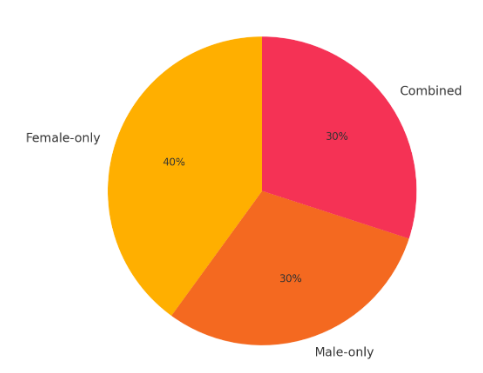
      • Male issues (low sperm count, poor motility) account for about 25–35% of cases.
      • Good clinics test both partners thoroughly, because teamwork gives you the best chance.

proportion of infertility causes, which occurs to both males and females, or both

Chart showing proportion of infertility causes, which occurs to both males and females, or both. It should also be noted that a small portion of infertility causes are unexplainable (World Health Organization, 2020).

Myth 5: “IVF means hospital stays and bed rest”

The myth: You’ll be admitted, laid up in bed for weeks, and restricted from daily life.
The fact: IVF is mostly outpatient and minimally invasive.

      • Egg retrieval and embryo transfer take less than an hour under mild sedation.
      • After transfer, most women return to normal activities right away–just avoiding heavy lifting or vigorous exercise for a short time.

Other myths you might hear

      • “A failed cycle means game over.” Not so–many couples succeed on later attempts.
      • “Infertility drugs cure all.” They help certain hormonal issues but can’t fix blocked tubes or severe male-factor problems.
      • “Stress is the main cause.” Stress affects overall health, but medical issues like ovulation disorders or low sperm count are the real culprits.
      • “Insurance always covers IVF.” Coverage varies widely–many Malaysians pay out-of-pocket, though many clinics now offer flexible payment plans.

Taking the next step

  1. Talk to a specialist early: If you’ve been trying for a year (or 6 months if you’re over 35), see a fertility expert.
  2. Get both partners checked: Infertility is a shared issue–testing both of you is the fastest path to answers.
  3. Ask about the process: Clinics in Malaysia follow the same modern protocols as top centres worldwide–outpatient procedures, single-embryo transfer, and gentle sedation–to keep you comfortable every step of the way.
  4. Look for support: Choose a clinic that offers counselling and connects you with support groups–fertility journeys are easier when you don’t go it alone.

We’re Here to Help

IVF and ART are safe, effective, and tailored to give you the best chance of a healthy singleton pregnancy. By busting these myths, we hope every Malaysian family feels empowered–because everyone deserves the chance to build the family they dream of.

At Metro IVF, we believe IVF and ART are safe, effective, and personalized to maximize your chances of a healthy singleton pregnancy. Don’t let myths hold you back—empower yourself with trusted care and expert support. Everyone deserves the chance to build the family they dream of.