Gynecological Screening: Taking Charge of Your Health

Table of Contents

Your Guide to Gynecological Screening: Taking Charge of Your Health

Understanding Gyne Gynae Screening

When it comes to women’s health, prevention is always better than cure.
That’s where gynecological screening comes in.

Think of it as your body’s regular “health service check” — a chance to spot problems early, often before you feel any symptoms. From Pap smears to mammograms, these tests are not just medical formalities; they’re powerful tools that can save lives.

What is a gynecological screening?

A gynecological screening is part of a well-woman visit — an annual check-up with your healthcare provider, specifically Obstetrics and Gynaecology (O & G) specialists. It’s more than just looking at your reproductive health; it’s a full-body pit stop to check on your overall well-being.

A typical visit may include:

  • A friendly chat about your health history, lifestyle, and any concerns (periods, menopause, birth control, fertility, sexual health, and more).
  • A physical exam to check your reproductive organs, breasts, and general health.
  • Preventive screenings — for cancers, infections, or other conditions — based on your age, health history, and risk factors.

Why do I need screening?

Screenings can:

      • Catch diseases early — when treatment is most effective and less invasive.
      • Prevent illness — some tests, like Pap smears, can find abnormal cells before they turn into cancer.
      • Give peace of mind — knowing you’re on top of your health.
      • Save money and stress — early detection can mean simpler treatments and fewer hospital visits.

Bar charts showing common conditions found during routine women health screenings (WHO, 2021).

Key screenings every woman should know about

  1. Cervical cancer screening

Cervical cancer was once a major cause of death among women — until the Pap smear came along and changed the story.

The Pap Smear:

      • Checks for abnormal cells on the cervix (the opening to the uterus).
      • Quick and usually painless — your doctor gently collects a few cells for testing.
      • Recommended every 3 years after the first initial yearly screening from age 21-65 or after being sexually active.

The HPV Test:

      • Looks for the virus (human papillomavirus) that causes most cervical cancers.
      • Can be done alone or with a Pap smear (“co-testing”).
      • Often recommended every 5 years from age 30–65.
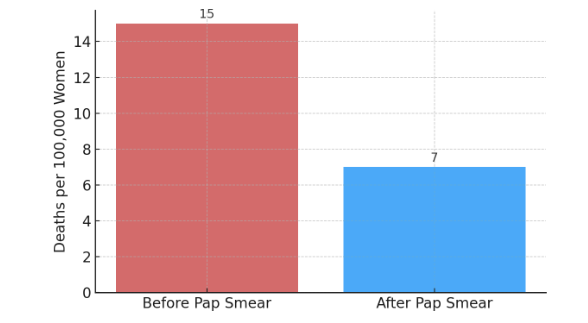
Bar chart showing death rates caused by cervical cancer before and after Pap smear screening became common (Arbyn et al., 2020).


  1. Breast cancer screening

Breast cancer is common, but early detection saves lives.

Mammogram:

      • A low-dose X-ray that can detect lumps too small to feel.
      • Usually starts around age 40–45 (guidelines vary).
      • May be annual or every 2 years, depending on your risk.

Clinical Breast Exam (CBE):

      • Your doctor examines your breasts and underarms for lumps or changes.
      • Often done during your regular check-up, especially before mammogram age.
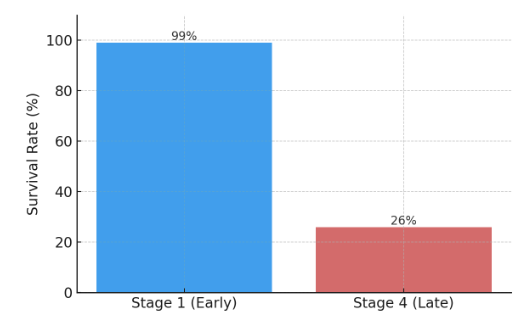
Chart showing much higher breast cancer survival rates when detected early (Cancer Research UK, 2023).

  1. Sexually transmitted infection (STI) screening

Some STIs have no symptoms but can cause serious long-term problems if untreated.

      • Chlamydia & Gonorrhea: Annual testing is recommended for sexually active women under 25, and for older women at higher risk.
      • HIV: At least once between ages 15–65, with repeat testing if at risk.
      • Hepatitis C: One-time test for most adults, with follow-up if needed.


How to prepare for my appointment ?

For a Pap smear:

      • Avoid sex, vaginal creams, or douching for 2 days before.
      • Try not to schedule during your period.

For a mammogram:

      • Avoid deodorant, lotions, or powders on your chest/underarms on the day.
      • Wear a two-piece outfit for convenience.
      • Bring past mammogram images if done at a different clinic.

Common Myths Debunked!

“Mammograms are painful.”
Some discomfort is normal but brief and it can save your life.

“I don’t need screening if I feel fine.”
Many conditions show no symptoms early on. Thats why screening matters.

“Only women with a family history need mammograms.”
Most breast cancers occur in women with no family history.

How gynecological screening helps in ART/IVF ?

Routine screening can:

      • Confirm you’re up to date on cervical cancer checks (Pap smear/HPV test) before pregnancy
      • Rule out untreated infections like chlamydia or gonorrhea, which can harm fertility or a future pregnancy
      • Identify structural problems in the uterus or cervix if a pelvic exam is done
      • Spot general health issues (e.g., high blood pressure, diabetes risk) that may need managing before IVF

These results help clear the path for fertility treatment by ensuring there are no hidden health risks.

Why additional tests are needed for ART/IVF ?

ART and IVF require much more specific fertility-related information than routine gynecological screening provides.
Extra tests often include:

      • Hormone tests (AMH, FSH, LH, estradiol, progesterone, thyroid function) to check ovarian reserve and cycle timing
      • Pelvic ultrasound to count antral follicles and assess the uterus and ovaries in detail
      • Tubal patency tests (like HSG or HyFosy) if natural conception is still an option
      • Semen analysis for the partner
      • Infectious disease screening (HIV, hepatitis B/C, syphilis) — often repeated even if previously done
      • Genetic carrier screening (optional, depending on personal/family history)

Metro IVF’s comprehensive gynecological screening package

At Metro IVF, as part of our Obstetrics and Gynaecology (O & G) services, we make it easy for women to stay proactive about their health with our Women’s Health Screening Package — designed not just for detecting problems, but for protecting your long-term well-being.

Our package includes:

      • Breast examination – to check for lumps or unusual changes.
      • Ultrasound scan of ovaries, uterus, and pelvis – to detect cysts, fibroids, or structural issues.
      • Papanicolaou test (Pap smear) – to screen for cervical cell changes before they become cancerous.
      • Urine test – to detect urinary tract infections and early signs of diabetes.
      • General body blood test – to check key health markers.
      • Tumor marker CA 125 – a blood test that can indicate ovarian tumors or other conditions.

Our screenings can help identify common gynecological problems early, including:

      • Endometriosis
      • Fibroids
      • Breast cancer
      • Gynecological cancers
      • Ovarian cysts
      • Polyps
      • Sexually transmitted diseases (STDs)

Regular screening with Metro IVF gives you the confidence of knowing you’re in expert hands, with results that are reviewed by specialists who understand women’s health at every stage of life. We’re here for you, every step of the way. Contact us today to speak with our caring team and take the next confident step into parenthood.