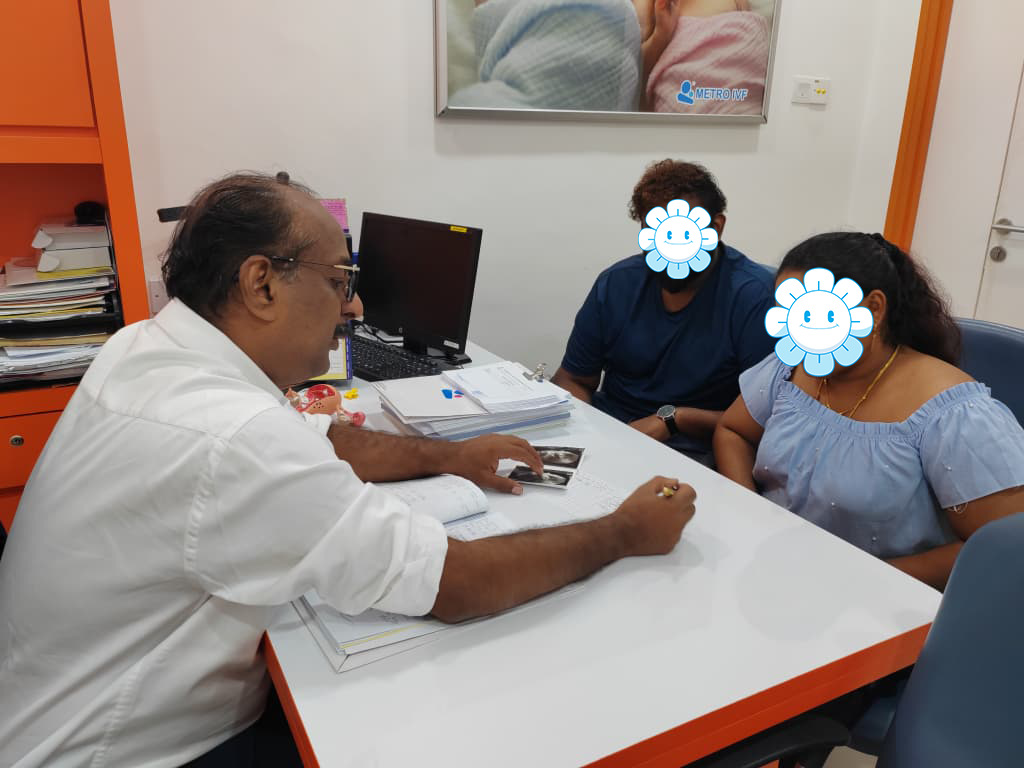
Repeated IVF Failure? My Strategy in Optimising the Uterus Before FET – Leading to a Positive Pregnancy Test
Repeated IVF failure is one of the most emotionally challenging experiences for any couple. When implantation does not occur despite multiple attempts, it is important not to simply repeat the same protocol but to reassess and refine the strategy.
Recently, I managed a 36-year-old patient with a five-year history of infertility. She had undergone three failed IUI cycles and two failed IVF cycles, including a previous frozen embryo transfer (FET). She had also experienced a miscarriage at 7 weeks.
She was diagnosed with PCOS and had irregular menstrual cycles. Her fallopian tubes were patent, and initial investigations did not reveal major abnormalities.
However, repeated IVF failure requires deeper evaluation.
Repeated IVF Failure: Looking Beyond the Embryo
In many cases, patients assume embryo quality is the primary cause of IVF failure. While embryo quality is important, successful implantation depends equally on the uterine environment.
Before proceeding with another IVF cycle, I focused on optimising her overall reproductive health.
Hence, her Vitamin D level was noted to be suboptimum. Optimum Vit D level is an important but sometimes overlooked in fertility management.
On ultrasound assessment of the endometrial cavity, the endometrium is always noted to be irregular with polypoid growth measuring 1.1cm. Hence, I performed hysteroscopy polypectomy and Dilation and Curettage.
The histopathology report showed:
Proliferative phase endometrium with possible endometrial polyp.
Even small endometrial polyps can interfere with embryo implantation. These may not always be clearly visible on routine ultrasound. Hysteroscopy allows direct visualisation and removal of subtle abnormalities that may contribute to recurrent implantation failure.
Preparing the pelvis and optimising endometrial receptivity in managing repeated implantation patients failure.
Strategic IVF Planning and Endometrial Preparation Before FET
After addressing the uterine factor, we proceeded with a new IVF stimulation cycle.
Egg pick-up (OPU) was successfully performed, resulting in five embryos.
Rather than performing a fresh transfer, we opted for a frozen embryo transfer (FET) cycle. FET allows better hormonal control and optimal endometrial preparation, which can improve implantation outcomes in selected patients.
Two embryos were transferred during the FET cycle, and three embryos remain frozen for future use.
Her pregnancy test returned positive, and beta hCG confirmed a successful implantation. (Serum B.HCG level 972.0)
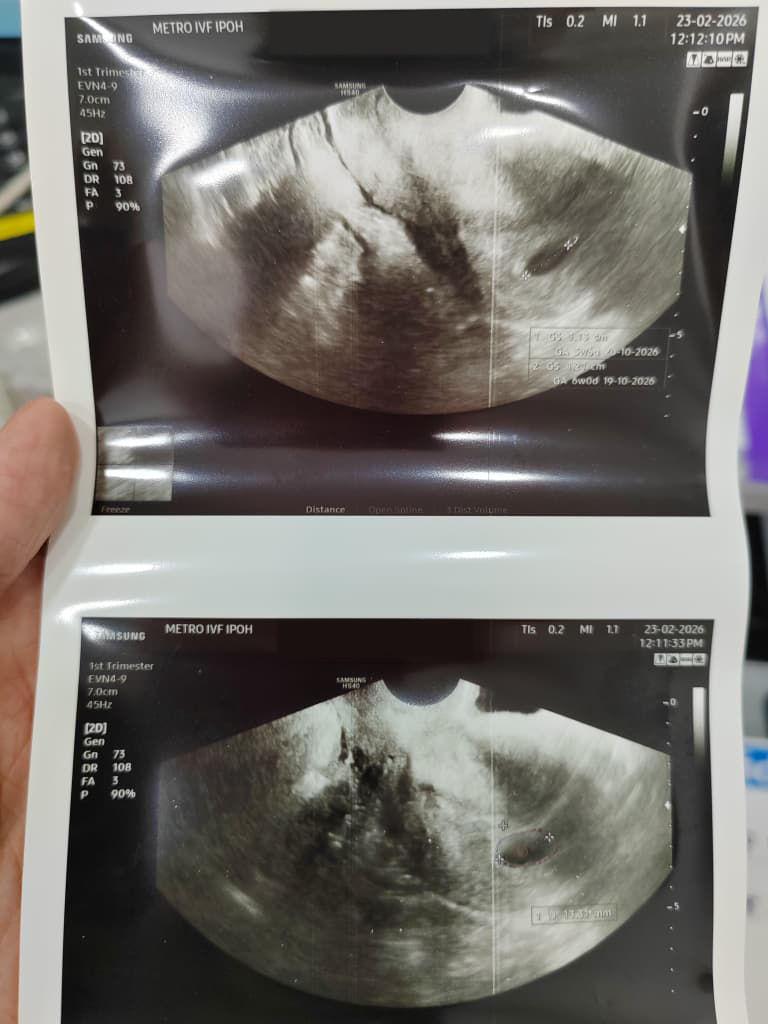
Key Takeaways in Managing Recurrent IVF Failure
In my clinical practice at Metro IVF , managing repeated IVF failure involves:
● Comprehensive reassessment trouble shooting rather than immediate repetition
● Hysteroscopic evaluation of the uterine cavity when indicated
● Removal of endometrial pathology such as polyps and careful endometrial
optimisation prior to embryo transfer
● Correction of nutritional and hormonal imbalances
● Individualised FET protocols
IVF success is not solely about the number of eggs retrieved or embryos created. It is about strategy, precision, and timing. Most importantly, it is about ensuring that the uterus is fully prepared to receive the embryo.
When Should You Consider Further Evaluation?
If you have experienced:
● Recurrent implantation failure
● Unexplained negative pregnancy tests despite good-quality embryos
It may be time to evaluate the uterine cavity more thoroughly before proceeding with another cycle.
Repeated IVF failure does not mean the end of the road. We need to look back at our endometrial preparation, metabolism, hormonal conditions, and transfer protocols.
Sometimes, success comes from refining the approach, not repeating the same one.
About the Author

Prof. Dr. Jayabalan A/L Valliapan is a Consultant Obstetrician & Gynaecologist, Fertility Specialist at Metro IVF Ipoh , providing personalised fertility treatment including IUI, IVF, FET, hysteroscopy, and management of complex infertility cases.

