Why Getting a Second Child Is Harder: Secondary Infertility Malaysia
What is Secondary Infertility?
Secondary infertility happens when couples who already have a child struggle to conceive again. In Malaysia, it affects about 1 in 7 women. Unlike primary infertility (when a couple has never had a child), secondary infertility feels uniquely painful. Parents feel grateful for their first child but may also face sadness, guilt, or pressure when hopes for a second one don’t come easily.
This condition is becoming more common as couples in Malaysia delay marriage and parenthood, contributing to the country’s declining fertility rate.
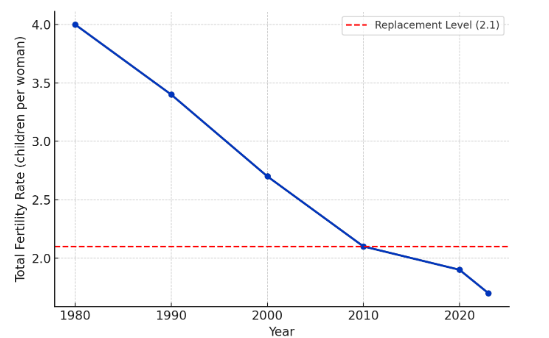
Chart showing Malaysia’s declining fertility rate from 1980 to 2022 (LPPKN, 2025)
Causes of secondary infertility in Malaysia
There are several reasons why couples may find it harder to conceive a second time:
- Age factors: Women over 35 and men over 40 naturally face reduced fertility. Egg and sperm quality decline, and miscarriage risk increases.
- Health changes: Conditions like endometriosis, PCOS, or diabetes may develop after the first child.
- Birth complications: C-sections or miscarriages can leave scar tissue that affects future fertility.
- Male factors: Low sperm count, poor sperm motility, or conditions like varicoceles.
- Lifestyle issues: Smoking, alcohol, stress, and weight changes can lower fertility in both men and women.
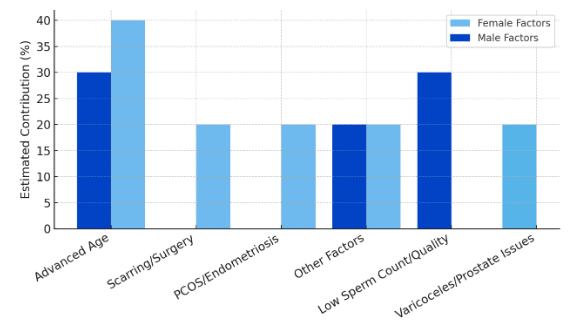
Chart showing common female and male factors potentially causing second infertility (CCRM, 2025)
Emotional and social struggles
The journey is not just medical—it’s deeply emotional:
- Silent grief: Parents may feel guilty for wanting another child while already having one.
- Hurtful questions: Comments like “When’s baby number two?” can be painful.
- Cultural pressure: Malaysian families often expect siblings, which adds stress.
- Stigma and secrecy: Many couples hide their struggle because infertility is still taboo.
When to seek medical help
Doctors recommend:
- Under 35 years old: See a specialist after 12 months of trying.
- Over 35 years old: Seek help after 6 months.
- Known health issues: Consult earlier to improve chances.
Fertility treatments in Malaysia
Malaysia offers a wide range of fertility treatment options:
- Ovulation induction – medication to help release eggs.
- IUI (Intrauterine Insemination) – placing sperm directly into the uterus.
- IVF (In Vitro Fertilisation) – fertilising eggs in a lab and transferring embryos.
- ICSI (Intracytoplasmic Sperm Injection) – injecting a single sperm into an egg (used for male infertility).
- PGT (Preimplantation Genetic Testing) – checking embryos for chromosome issues.
- Surgery – to correct conditions like blocked fallopian tubes or endometriosis.
Malaysia has internationally accredited fertility clinics in Kuala Lumpur, Johor Bahru, and other major cities, with clinics reporting IVF success rates of 65–75%, with some achieving even higher for selected patients.
IVF cost and financial support in Malaysia
The cost of fertility treatment in Malaysia can be high:
- IUI: RM1,000–5,000 per cycle
- IVF: RM9,900–50,000 per cycle (depending on clinic, medication, and add-ons like ICSI or PGT)
To ease the financial burden, the government provides support:
- EPF (KWSP) withdrawal – Couples can use their retirement savings to pay for fertility treatments such as IUI, IVF, and ICSI.
- LHDN tax relief – Up to RM10,000 in tax deductions for fertility treatment expenses.
- LPPKN programmes – Initiatives to raise fertility awareness and provide financial assistance.
Emotional support and counseling
Secondary infertility in Malaysia can strain mental health and relationships. Counseling services at fertility clinics and online support groups can help couples cope. While Malaysia lacks dedicated local support groups for secondary infertility, couples often turn to international communities such as RESOLVE.
Moving forward with hope
Secondary infertility is more common than many people think. It combines medical, emotional, and financial challenges—but there is hope.
Tips for couples in Malaysia:
- Seek medical advice early to improve your chances.
- Communicate openly with your partner and consider counseling.
- Use available financial aids like EPF fertility withdrawal and LHDN tax relief.
- Find support through online communities and professional counselors.
With world-class fertility clinics, supportive government policies, and growing awareness, Malaysia offers couples a real chance at expanding their families.

