Egg Freezing and Sperm Freezing Today: Why Vitrification Is the Gold Standard
Fertility preservation has improved dramatically over the last 20 years. The main reason is a modern freezing technique called vitrification, which is now widely used for egg freezing, embryo freezing, and increasingly for sperm freezing in selected cases.
At Metro IVF, vitrification helps patients preserve fertility with high survival rates and strong clinical outcomes—whether you are freezing eggs for future family planning, preserving sperm before medical treatment, or preparing for IVF.
What Is Vitrification?
Vitrification is an ultra-fast freezing method that turns the liquid inside cells into a glass-like state without forming ice crystals.
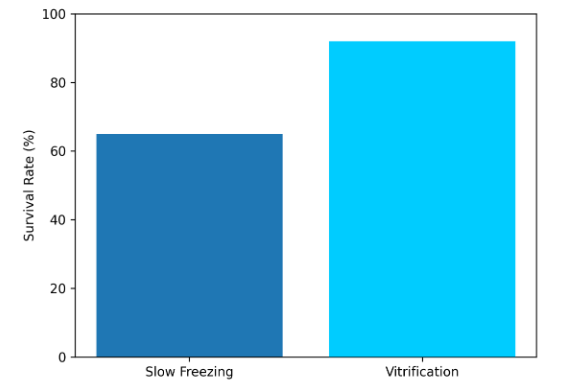
Chart showing significantly higher egg survival rates after warming with vitrification compared to conventional slow freezing. Modern vitrification techniques routinely achieve survival rates close to fresh eggs, making them the preferred method for egg freezing (Cobo et al., 2011).
This is important because ice crystals can damage reproductive cells. With older slow-freezing methods, ice formation was common and could harm eggs or sperm. Vitrification, by contrast, minimises ice formation and leads to better cell survival. This is why vitrification is considered the gold standard in modern fertility clinics.
Why Eggs Are Harder to Freeze Than Embryos or Sperm
Human eggs (oocytes) are the largest cells in the body and contain a high amount of water. In the past, this made egg freezing unreliable because even tiny ice crystals could damage the egg membrane, chromosomes, or internal structures needed for normal fertilisation and embryo development.
Vitrification reduces these risks by combining special protective solutions (called cryoprotectants), extremely rapid cooling, and rapid warming. Together, these steps help modern egg freezing achieve far more consistent results than older freezing methods.
How Egg Vitrification Works
During egg freezing (also called oocyte vitrification), the process typically involves several steps. Hormonal stimulation is used to help the ovaries mature multiple eggs, which are then collected in a short procedure. The eggs are exposed to carefully timed protective solutions and placed on tiny carriers with very small fluid volumes. They are then stored in liquid nitrogen at –196°C until they are needed.
When the eggs are used in the future, they are warmed quickly and assessed before fertilisation.
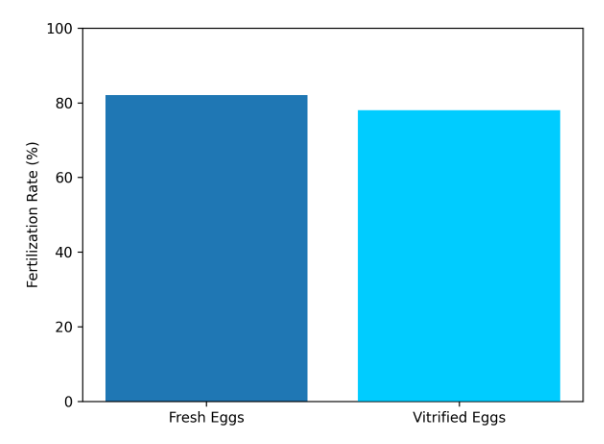
Fertilization rates using vitrified eggs are comparable to fresh eggs when ICSI is used. This demonstrates that modern egg freezing does not significantly compromise fertilization potential (Cobo et al., 2011).
Vitrification vs Slow Freezing: What’s the Difference?
Vitrification is faster, simpler to perform in the laboratory, and usually results in higher egg survival rates compared to traditional slow freezing. It also reduces the time eggs spend in temperature ranges that can damage delicate internal structures, such as the meiotic spindle.
In everyday IVF practice, vitrification has become the default method for freezing eggs and embryos in most fertility centres.
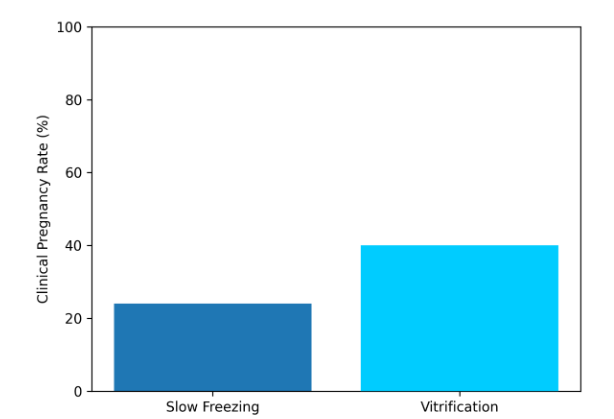
Clinical pregnancy rates are higher with vitrified eggs compared to slow-frozen eggs. This supports vitrification as the modern standard for fertility preservation (Glujovsky et al.. 2014).
Does Freezing Affect Egg Quality?
This is one of the most common concerns among patients. In general, survival after warming is high with vitrification, often exceeding 90% in many programmes. Fertilisation and embryo development outcomes are frequently close to those seen with fresh eggs, especially in younger patients. Pregnancy outcomes still depend on multiple factors, including age at freezing, the number of eggs frozen, sperm quality, and uterine health.
Why ICSI Is Usually Recommended After Egg Freezing
Egg freezing can make the egg’s outer shell, known as the zona pellucida, slightly tougher. Because of this, fertility specialists typically use ICSI (intracytoplasmic sperm injection), where a single sperm is injected directly into the egg, to improve fertilisation chances when using frozen eggs.
Modern Sperm Freezing: Where Does Vitrification Fit?
Most clinics continue to use conventional sperm freezing methods successfully. However, research into sperm vitrification suggests it may better preserve certain sperm functions, particularly motility, in some situations.
Two main approaches to sperm vitrification are currently studied. One uses high levels of cryoprotectants and is generally less preferred due to potential toxicity. The other, known as kinetic or cryoprotectant-free vitrification, freezes very small droplets extremely rapidly with minimal or no permeating cryoprotectants.
Research indicates that sperm vitrification may improve post-thaw total and progressive motility. While DNA integrity results are often similar between methods, improved motility can be helpful in selected cases, especially when sperm counts are low or when preserving very small samples.
Is Vitrification Safe for Future Children?
Current evidence is reassuring. Large studies comparing children born from vitrified eggs with those from fresh eggs show no significant increase in birth defects and similar early childhood growth and development. This is one reason vitrification is considered a safe and well-established clinical method by professional societies and fertility clinics.
The Biggest Success Factor Is Still Age
Even with advanced technology, age at the time of egg freezing strongly influences future success because egg quality naturally declines over time.
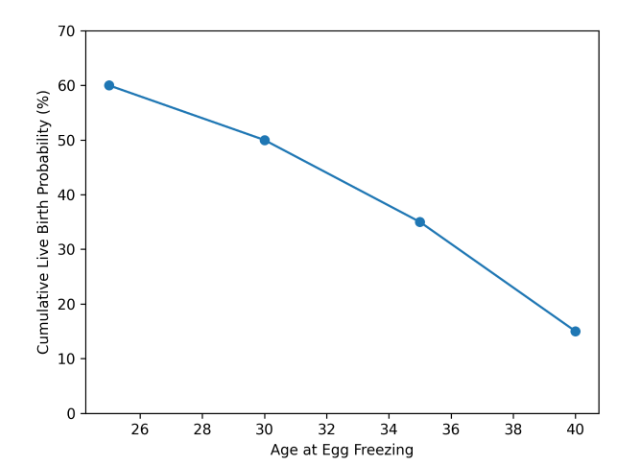
Egg freezing success rates decline with increasing age at the time of freezing. Freezing eggs at a younger age provides higher cumulative chances of future live birth (Cobo et al., 2016).
In counselling, general guidance often includes freezing eggs before age 35 for the best outcomes. Freezing more eggs usually increases the cumulative chance of pregnancy, with many clinics aiming for around 15–20 eggs depending on age and individual circumstances. For women with lower egg reserves, multiple cycles may be recommended to accumulate enough eggs.
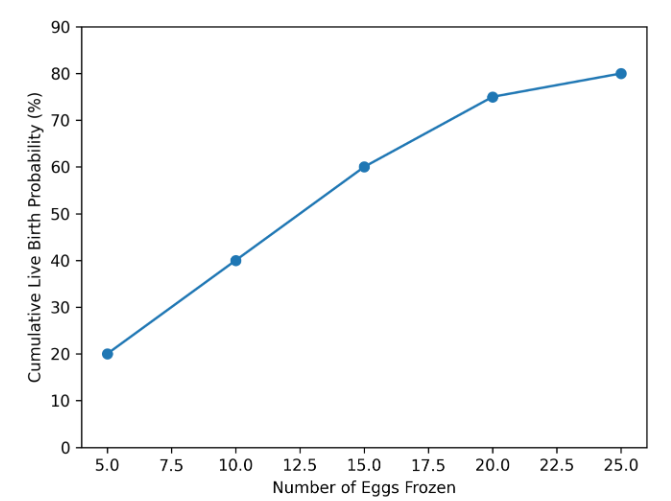
Cumulative live birth rates increase with the number of eggs frozen, with optimal outcomes commonly observed around 15–20 eggs. Additional eggs continue to increase overall chances, particularly for older patients (Goldman et al., 2017).
Open vs Closed Vitrification: What Does It Mean?
Patients sometimes ask whether the laboratory uses open or closed vitrification systems. Open systems allow direct contact with liquid nitrogen and may achieve higher cooling rates. Closed systems isolate the sample from liquid nitrogen, adding an extra sterility barrier but sometimes reducing cooling and warming speed.
Research suggests that both approaches can work well when protocols are carefully optimised and laboratory quality control is high.

